The crew
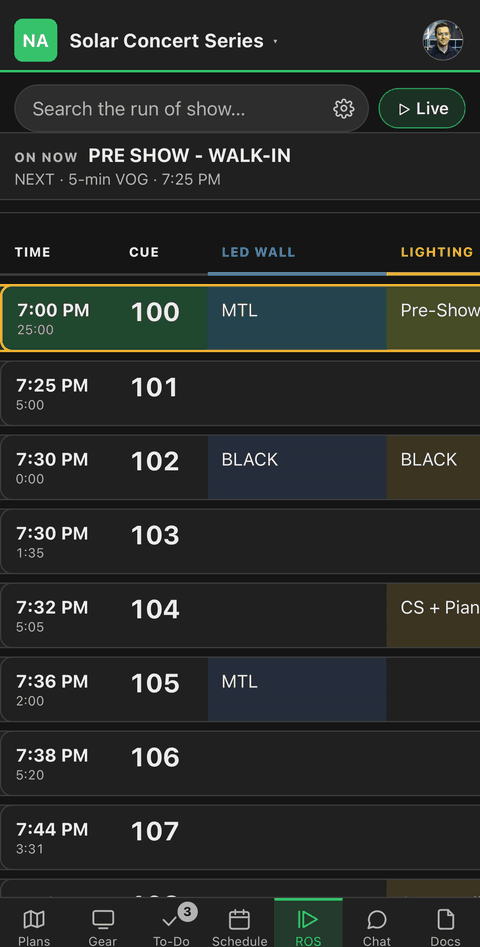
One person calls it. Everyone follows.
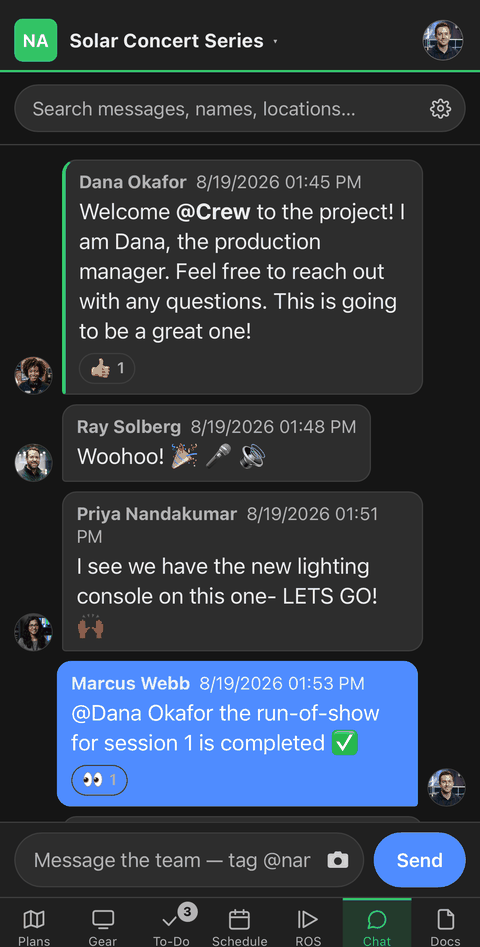
Tag a person or a place. The conversation stays with the show, and it’s still searchable next week.

sholo · for live production and AV crews
One schedule for the whole show, filtered to each person’s own calls.
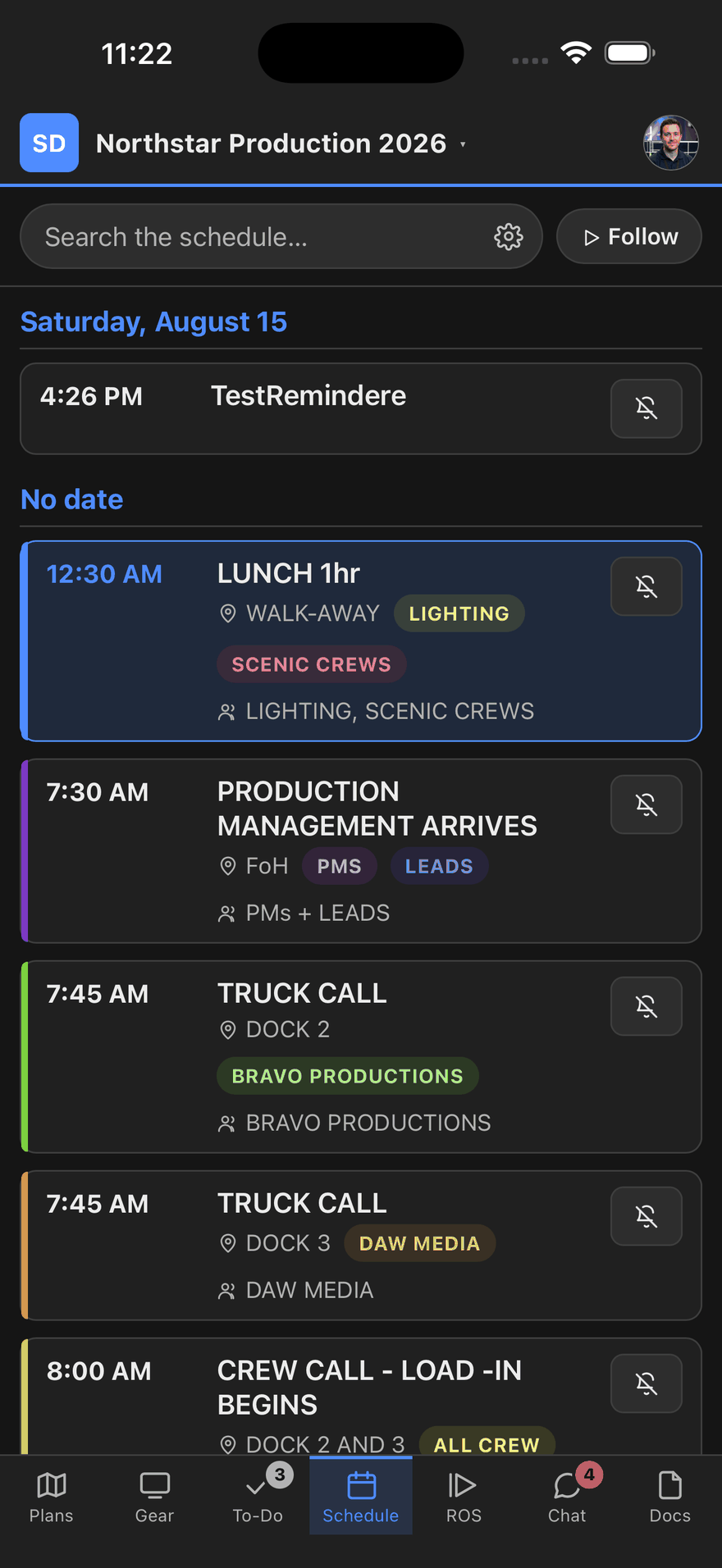
Load-in to load-out, in the order it happens.
A freelancer on one department does not need the other five. Switch to just their own and the day is the four things they are called for, which is a screen somebody will actually read at 6am.
The whole schedule is still there. It is a filter, not a wall — a tech who wants to know when the scenic crew is out can look.
Load-in and build, rehearsal, show days, load-out. Each entry carries a time, a place, and who it is for — a department, a team, or a named person. It reads as a day rather than as a list of notifications.
A show that is part of a project shares the schedule both ways: put a call on the master and it shows on the show it belongs to, and the other way round. One project with three shows does not become three schedules that disagree by Wednesday.
Today the day’s changes live in a message chain — trucks moved to dock 3, the client pushed the demo to another room, crew call is an hour earlier. It works for about four hours. After that it is unsearchable, and it is invisible to whoever joins the crew tomorrow.
The person who most needs yesterday’s decision is the person who wasn’t in the chain when it was made.
A call can ask for an answer, and the answer comes back to the person who made it. Nobody is chasing eleven people individually to find out whether they saw the 7:30 change, and nobody is assuming silence means yes.
Notifications land on the phone for the calls that are actually theirs. Everything else stays quiet, because a tool that buzzes for everybody’s business gets muted, and then it is not a tool.
Crew structure is a chart rather than a list. The producer at the top, the leads under them, and every position on the show underneath that — down to the one-day camera operator on the bottom of a limb.
Address something to a department and it reaches everyone in it. Somebody working two positions on one show is one person with one set of calls, not two rows and two invitations.
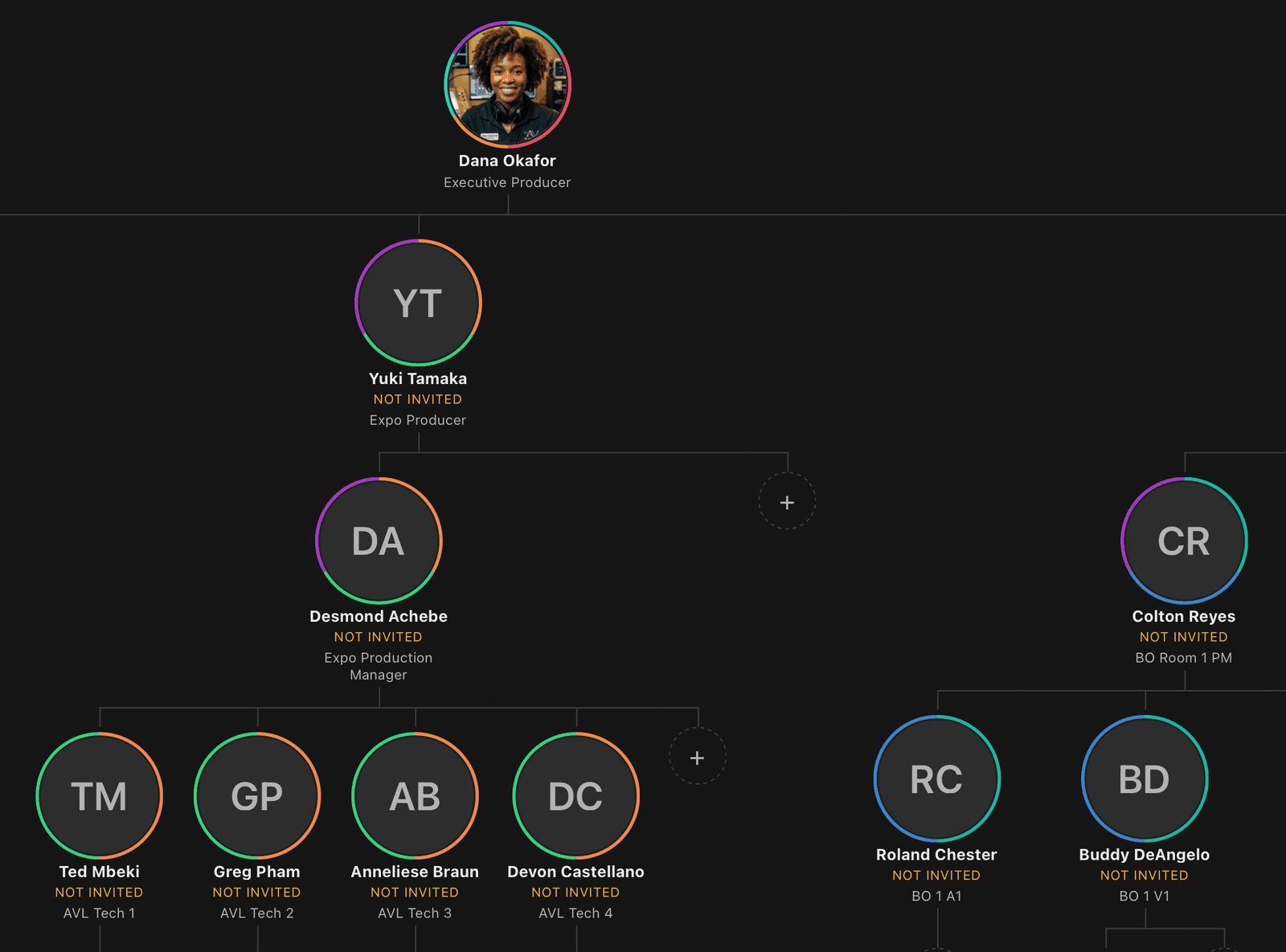
One corner of a chart that carries the whole show. The ring is the shows and departments that position works; amber means somebody is penciled in but has no account yet, and the card offers the invitation.
Day labor and local hands get exactly the show they are on, for as long as they are on it. Not the client list, not the other shows, not the company’s messages. When it wraps, you end it — which is the thing a printed call sheet in somebody’s pocket has never let you do.
The schedule sits with the floor plan, the gear list and the run of show for that show. A crew member opens one thing and finds where they are meant to be, what is there, and what is left to do.
The crew
Tag a person or a place. The conversation stays with the show, and it’s still searchable next week.
The plan
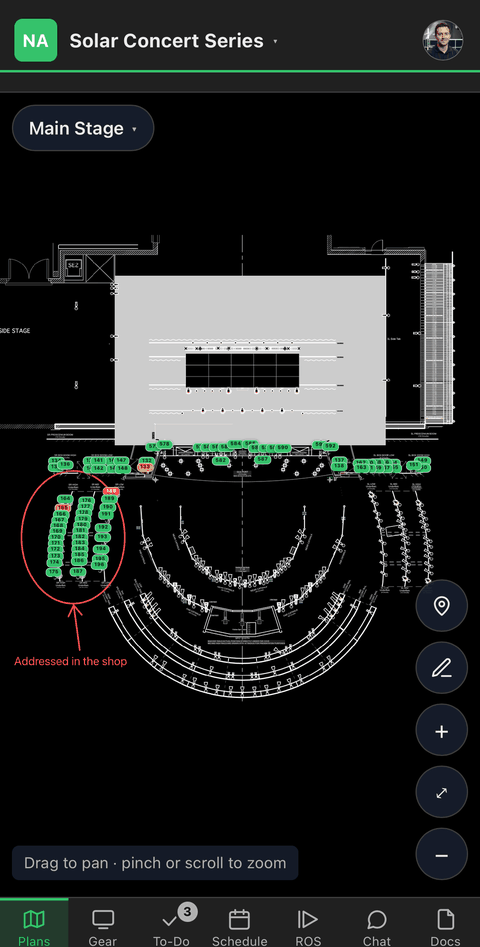
Red is a producer’s problem — something is missing. Amber is the crew’s. Green is done. You read the whole show without crossing it.
The gear
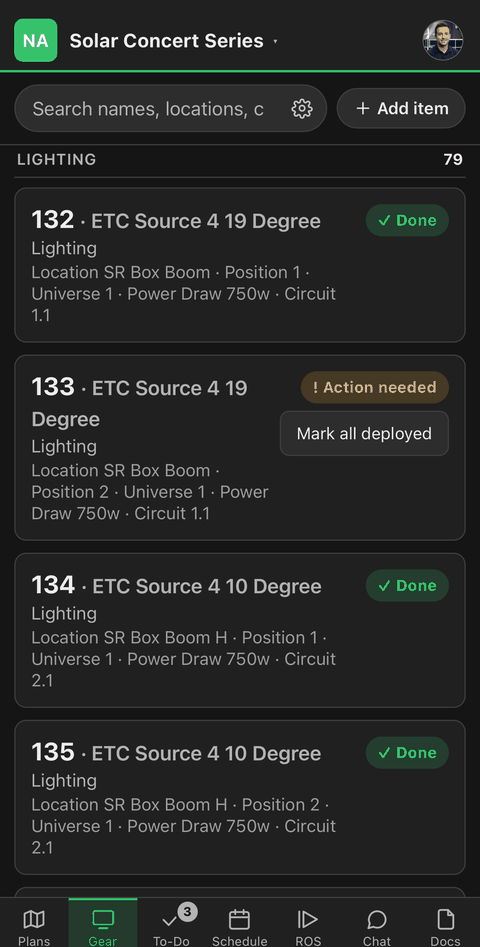
Every screen, player and speaker on the show, with its circuit, its owner and whether it’s up.
The show
A column per department, times that recalculate, and the called cue at the top of every screen.