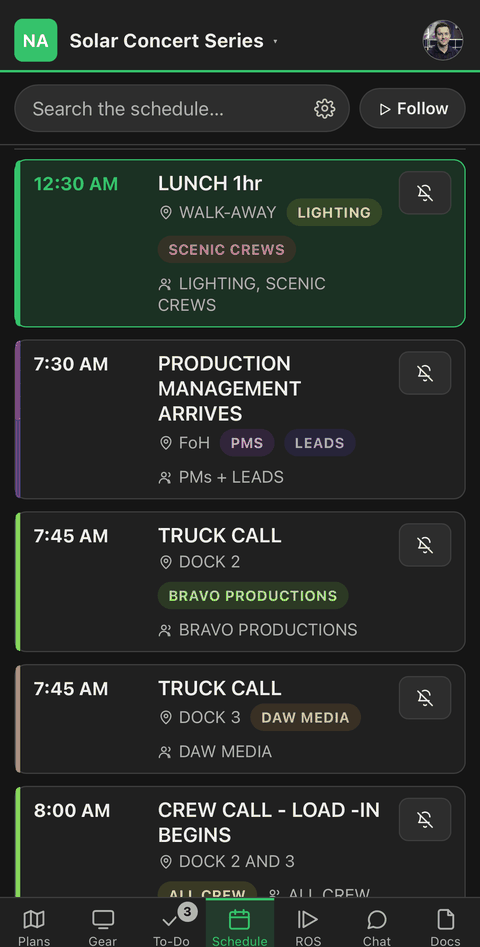
The work
Work tied to a spot
A to-do that points at a position, so “fix A29” is somewhere you can walk to.

sholo · for live production and AV crews
Every screen, player and speaker on the show — where it goes, who owns it, and whether it is up yet.
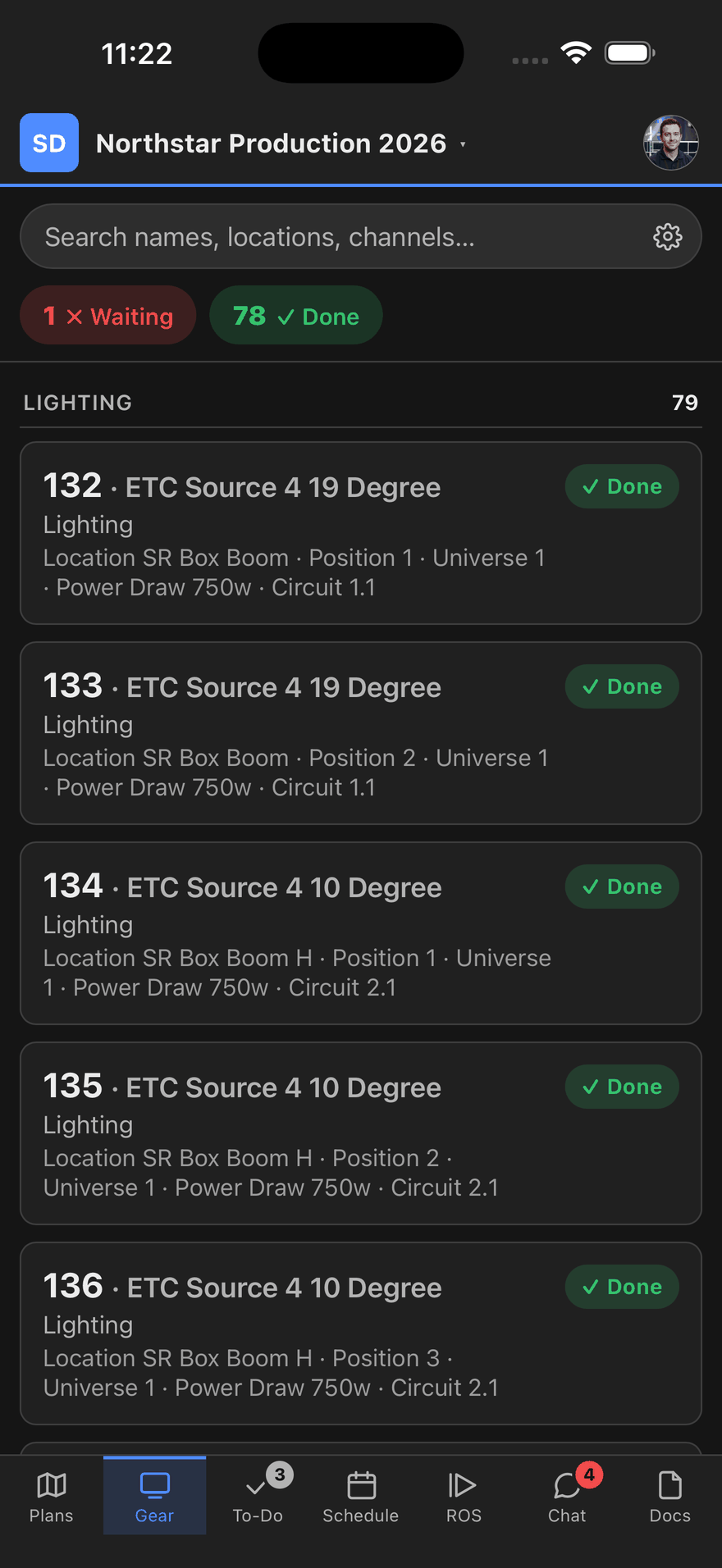
78 of 79 done — and you didn’t walk the show to find out.
If the question is what your company owns, where it is warehoused and what is out on which order, that is a rental system and there are good ones. This is the other question, and it is the one nobody has a screen for: what is on this show, right now, and is it working?
Today that gets answered by walking the show, or by asking somebody on a group text who is also walking it.
Nobody is retyping four hundred lines. Bring in the spreadsheet the show already runs on — Excel or CSV — and the columns you use come across as they are. A column with no heading is kept rather than dropped, and two columns that mean the same thing both survive. Guessing which one to discard is how an import loses the one field a particular shop runs on.
Re-import an updated list later and it matches against what is already there and shows you what will change before it changes.
Four hardware states, and they are the four that describe a real install: not deployed, deployed, needs power and struck.
Needs power is separate on purpose. A screen that is hung but dark is not the same problem as a screen that never arrived, and a producer counting what is up should see it as hung. Struck is hardware, not content — the thing is gone, and filing that under content status was always a category error.
Content is tracked separately, in your own words. One shop says ON ONEDRIVE, the next says Need Content, so you set the content statuses per show and say what each one means: ready, pending, or nothing needed here. A file approved on a drive is not a file loaded onto the player at the booth, and the gap between those two is real work.
Each list carries a count — 78 of 79 done — and a meter. That is the number a production manager needs when the client asks how it is going, and “about three quarters” is not an answer anybody can work with.
The count comes off the whole list rather than off whatever is currently filtered, so hiding completed items does not make the show look bigger than it is.
Take a reference photo of how a position should look, at the position. Next show in the same room, next crew, the picture is already there. That is the fastest way to stop explaining the same install three times a year.
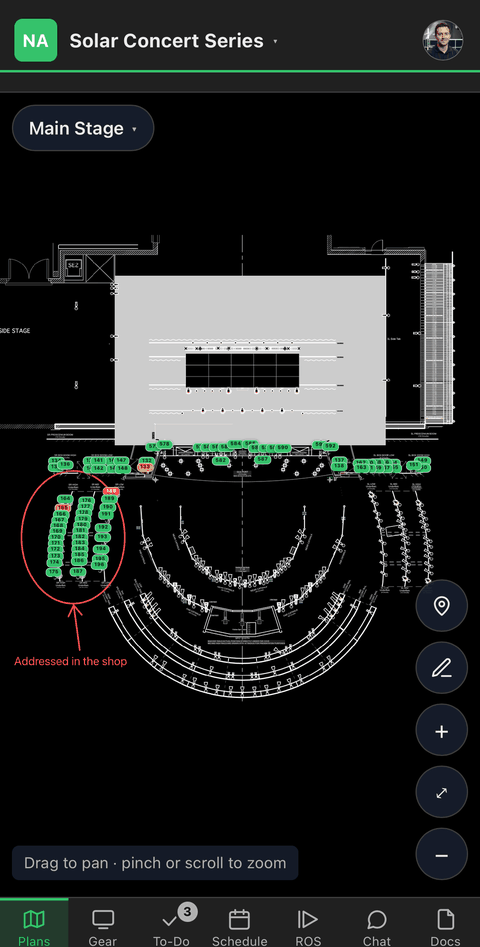
Every item can carry a pin on the floor plan, so the list and the room are the same information seen two ways. A to-do can point at a specific position, which is what makes “fix A29” a thing somebody can walk to rather than a thing they have to ask about first.
The plan
The same gear, seen as a room. Tap a pin for what’s at that spot.
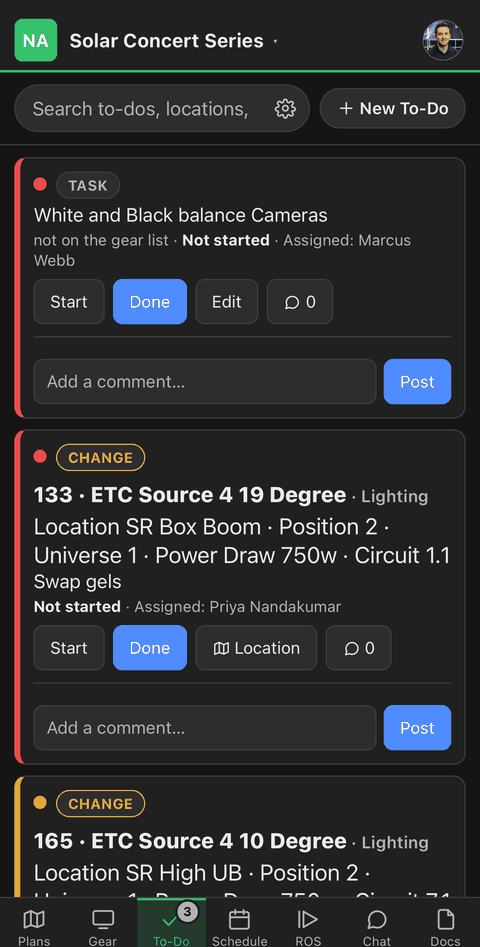
The work
A to-do that points at a position, so “fix A29” is somewhere you can walk to.
The show
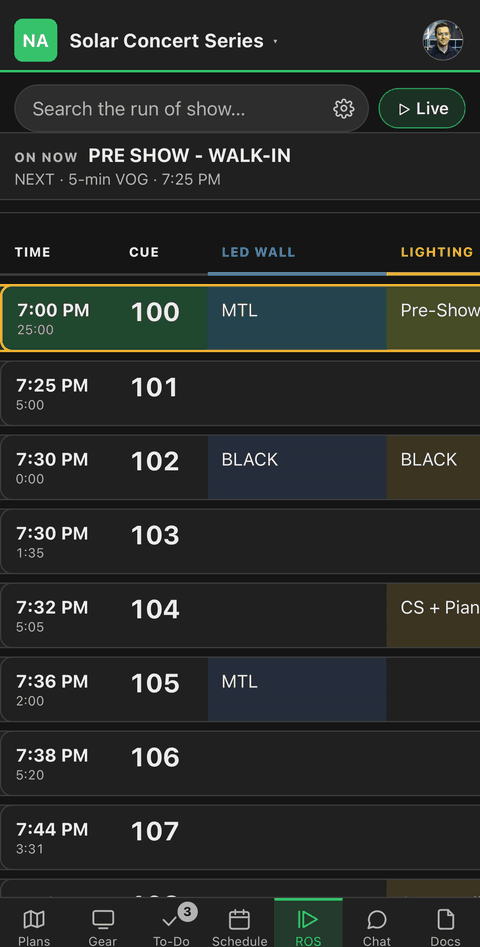
A column per department, times that recalculate, and the called cue at the top of every screen.
The crew
Load-in to load-out, filtered to the person holding the phone.